Thursday, September 5, 2024

Freaking Out Over Privacy


  • How do these issues affect you? You friends and family?
These issues affect me by leaking personal data about my day to day activity through location sharing services, license plate tracking and no real SMS encryption that is promised with SMS messages and other messaging platforms such as WhatsApp. For my friends and family this affects them since, for example in the second Ted Talk video, it discusses how police cars and other license plate readers at intersections can be useful, but also harmful. Even if you have done no wrongdoings for the police to come after you, they store this information "just in case" something happens in the future. Unfortunately, the government does not pick and choose as to what information they hold it is within hundred of thousands of people who are not even aware that their license plates are being used in such a way. An example that was given in the video was that there was a guy who went to the station about this and there were photos of him and his daughters in the driveway of their own home. This is super dangerous because everyone knows where you are and who you are with. 


  • What should the government be doing about these issues?
The Government should be using the these technologies only in a case of wrongdoing or absolute necessity not just withholding information to make their lives easier. There was an example given in the third Ted Talk video where using SMS and location tracking to make sure that terrorists, stalkers and other bad people do not commit the crimes they do, but government still keeps this just in case someone becomes a bad apple. They should be picking one choosing instead of having literal databases of citizens casually traveling to the grocery everyday. 


  • What can we do to protect ourselves from invasions of our privacy? 
What we can do is turn off location services, cookies, any tracking or super personal information. Make fake email accounts with a name for spam and a photo that isn't you. Make sure to secure your social media with second hand authentication, so that hackers cannot access your account and then more information. Always report suspicious activity as well, despot the police being against us to an extent, it is important reach out when an actual threat is in place. Lastly, cover your computer camera as having it open and in access can let hackers put a face to a name, for a not so good answer. 

Tuesday, September 3, 2024

Research On A Not-So-New Technology

 Who invented your technology? What were the circumstances? What problem were they trying to solve with their invention? 


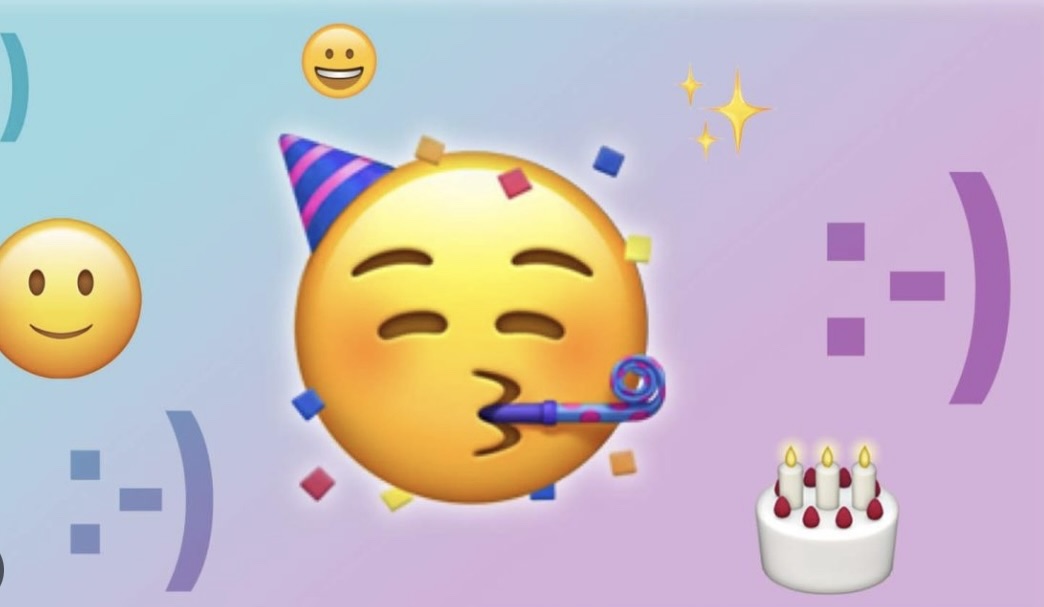
First off, how did the emoticon come to be? Where did the word even come from? According to, Academy Publication, the word is a combination of emoji and icon which equals emoticon. The reason was to add more a "human touch" to the digital world we were slowing moving towards in 1982. Computer Scientist, Scott Fahlman, was a young professor at Carnegie Mellon University at this time, when one morning, he decided to take his AI research to a whole another level. It was 11:44am on a Tuesday and posted a combination of a hyphen, a colon and a parenthetical. This was posted on CMU's "bboard". The after affects of this was that Fahlman was placed into the Guissiness World Records as the inventor of the "emoticon" which overall leaded into the well known emojis we all use in instant-messaging today. However, it took years to recover the "bboard" post due to the fact that during the 80's there was no real way to save this profound discovery. "This was retrieved from the spice vax oct-82 backup tape by Jeff Baird on September 10, 2002.  The period covered is 16 September 1982 through 21 October 1982." Stated an original thread that was found 20 years later. 


I found an article that Scott Fahlman wrote about the history of the emoticon and how it came be. He elaborates how his discovery was simple, yet record breaking. This later on affected (not until the late 1990's) the now famous "emoji" and lots of other emoticons that you can discover today which is used by over a billion people on a daily basis. Overall, Dr. Fahler walked, so that other people such as Japanese artist Shigetaka Kurita could run into creating the emojiIn another article from CNN Business, he discusses his reasoning behind even using that smiley "emoticon" to begin with. “When you’re on a text-only internet medium, people can’t tell if you’re kidding or not. There’s no body language, no facial expressions.” This explains that his plan was to get sarcasm across, no matter how you felt and so that it could deescalate feelings of hurt that would often occur in email threads or chatrooms. 


How did the invention change our world? What problems did it solve? How did it change communication? Did it have any negative effects?


Overall, this changed the world so much that now when you type the original "smiley" combo into popular platforms such as Microsoft Word it automatically changes into some form of an emoji -- really showing the passing through time. How we went from :-) to 😁. This invention changed our world because people now were to dissern what kind of okay was it. Just like how you interact with your friends on a day to day basis, you have their eye contact, body language and tone of voice. The emotions and the emojis give you that outlet that you would not get otherwise. From adding a laughing emoji, to a thumbs up or a smile, you now can tell how your best friend feels rather than just reading words on a screen. Or, as Dr. Fahlman would put it -- "giving our words a deeper sense of embodiment". 


It solved the well known problem of -- is my boss mad at me, am I crazy or can I just not discern facial and expressive emotions through an email at 7am. From the same CNN article from earlier which explains the history of the emotion puts this perfectly, "...now a global effort to expand our digital forms of expression, spanning staff at tech companies and Unicode as well as input from users"

It overall changed communication with fast forward to the 1999 with the discovery of an emoji, which was used mainly in Japan for awhile before transgressing over to the United States. A group called "Unicode" was interested in making digital hearts on a computer screen, but it was not until years later they're started to shift gears a bit. They are based as an international technology company who was posed with the job to make a language barrier -- not so much of a barrier anymore. Apple and Google were the ones who asked this group to come up with something unique to add to their list. Unlike today with censorship, Unicode even pitched an idea back then with a middle finger emoji where rules, especially in Japan, were less strict. Today, there’s a lot of rules, and they’re fairly well documented and new emojis do go through quite a rigorous process.”


Today, there are over 3,000 emojis, but that does not stop Apple for demanding even more. Every September alongside the annual iPhone release and update, there are a bunch of new emojis that Unicode is constantly developing. Now, everyone has these little faces and icons at the tip of their fingers. Despite having a bunch of options, Fahlman still defaults to the thing he started. “I prefer the little text ones, partly because they’re my babies.”


Thursday, August 29, 2024

All About Theories


A theory that personally resonates with me is the Promote Innovation theory. This theory I feel like I am super passionate about within the moment because I am in the creative field and will be, hopefully, after my time here at HPU. I want to be able to express myself in all sorts of media- rather than graphic design, a drawing, a poster that's hung up in classrooms. I want to be able to mark my word and have expressive creativity throughout all mediums. If one is able to express themselves to the full extent it makes humanity more so of a unique society. The world would be simply boring without any sort of creative people within it. Art makes people be able to express themselves from the inside to whatever extent they would want to. 

One that I feel like feels more important and in action today is the Stable Change theory. Which basically discusses how nowadays it is super simple to express your opinion on a "controversial issue." People need a safe space to be able to vent, express, yell their words out even if it is something that comes up on your Twitter timeline, that you personally disagree with. An article I found in The Washington Times talks about current events which could be taken. Such as, you disagree with what is going on in Ukraine or you genuinely feel like it is okay. Or you want Kamala Harris to win this upcoming election or you Donald Trump too. It just depends on the person's political values and moral alignment. You should be able to express what you feel even if it makes you, the reader, frustrated or angry. Just because you disagree with something, does not mean it is automatically hate speech either. There are threats, just opinions. If the government were to limit this, all chaos would suddenly ensue. There could be more violence if people were not allowed to express themselves the way that they do on these platforms. The violence could therefore lead to innocent people losing their lives and therefore creating more of a stir within society. The first amendment protects your right to say these things, however, having a violence after taste in your Tweet could potentially place you in court or even worse, jail. Overall, having an outlet rather than social media, a journal, a friend, a piece of art, is all worth for the sanity of people themselves. 


Finally, one that feels personal to me is Individual Self-Fulfillment. Everyone should be able to meet the basic needs (referencing Maslow's Pyramid in this instance). All people, no matter who you are, deserve to have all of the first four, one-hundred percent locked in. However, it is up to the individual to have a time, place and period as to when they are able to officially reach their higher self. I feel like in recent years, especially with women's autonomy, it is something that should be up to the woman themselves rather than the government controlling what is going on. Being able to have the abilities to take a specific course of action can benefit humans themselves becoming more efficient and kind. 


Tuesday, August 27, 2024

U.S. Supreme Court Blog


  • I learned that a lot of the time that the Supreme Court or the government in general does a lot of things that they are not supposed to be doing. Such as, being 35 trillion dollars in debt because of supplying weapons and sending people away to wars that we aren't supposed to be a part of. Also, just a traditional fact is that a typical Supreme Court Judge has a 16 year service, which I did not know there was a statistic to that. 

    • What is the most important take-away point about the Supreme Court?

    - An important takeaway is that the Supreme Court is quiet about what they do. They do not suddenly make an announcement, they host their meetings amongst themselves and then eventually word gets out if it is important enough for the public to know about. This also can go about why there are artists who paint out the court case, for the privacy of the witnesses, jury and everyone else in that room. If a bunch of journalists were allowed in a room with cameras and questions, it could cause chaos inside and outside of the court. 

    • What was the most surprising thing you learned?

    - What was most surprising to me was that at one point the First Amendment was questioned and that having an opinion that could potentially jeopardize the government was seen extremely differently than it is now. Another article of information I found surprising was that the case called Marbury Versus Madison really made what the Supreme Court is today. That the government has the right to find laws that are considered unconstitutional and therefore remove them to make more sense of the government around them. Another thing that I find interesting is that there was a court case between a slave, Dredd Scott, who claimed his freedom within Congress, but then a judge named Roger Brooke Tanley but congress said that the court had no right to ban slavery. This was later resolved by the Civil War. 


Notes on the history of government
My Notes From The Lecture


  • How did the video change the way you thought of the Supreme Court?
- This video changed my way I think about the Supreme Court by having a sense of understanding as to what they do. Prior, I was confused as to what they do, don't do and other history I found vital. For example, the vitality of judicial review and a good definition of this is: the power of court to review all actions by all departments of government and determine them unconstitutional or not. Overall, I feel a lot more educated on the Supreme Court now than I did a few days ago. 

Thursday, August 22, 2024

Where do I get my news from?

Where I get my news from...

Actual News Programs: 

Women's Wear Daily and The Washington Times 

Online Sources:

Apple News, Instagram and Twitter. 

What am I consuming with these sources? 

- I am consuming a bunch of movies, music, fashion and lifestyle articles and news. 

What do you consume for WWD? 


For Women's Wear Daily, I consume a lot of feminine based clothing items. Lots of articles that I read are on what the current trends are for the season or even the next. Of course, there is always fashion week, so I always look forward to reading about what each high end or designer brand has done. I mainly read stuff on there because I am a fashion minor and feel like it is important to me to read up as to what is going on in the fashion world. 

What do you consume on Washington Times? 


Mainly for me on Washington Times, I consume a bunch of headlines. Recently, its been about the upcoming election. I also have been reading a few freelance articles such as health and lifestyle. I've been reading also a few music articles, so I am an avid concert attendee which I feel like adds up as to what I do in my free time as well as media consumption. 

What about Apples News? 


Apple News is interesting in the sense that it brings in The Wall Street Journal, NY Times, Washington Times and into one app. This is honestly a great way to get unbiased, hard, cold facts by reading the same article through a bunch of different news outlets. I like the versatility of this, however the subscription pop up does, indeed, have a chokehold on me. I feel like this is the main reason why a lot of people in society go towards social media instead of legitiment news outlets because of how most of them are subscription based. 

Instagram & Twitter:


Social media is a very, simple and quick way to get news, however the unfortunate thing is that most of the time the news is false. This makes it extremely difficult to actual read something and believe it, but then again, there are tabloids who also do the similar thing. I mainly consume headlines and local news from my hometown on Instagram and Twitter. A few of the newspaper I read are student run, especially my old high school newspaper I used to work for -- it's always interesting to see what they are up to. 


Final Media Blog Post : Relationship with Technology

  Introduction:  Technology is all around us nowadays no matter if we like it or not. It is ingrained in our lives in ways that no one thoug...